
Indigenous Peoples’ Knowledge
Indigenous Peoples’ Knowledge has always held significant value in the Arctic Council. The Ottawa Declaration (1996) recognized “the traditional knowledge of the indigenous people of the Arctic and their communities” and took note “of its importance and that of Arctic science and research to the collective understanding of the circumpolar Arctic.”
The Permanent Participants jointly created the Ottawa Traditional Knowledge Principles (2015) to provide guidance for the use of Indigenous Peoples’ Knowledge. They continue to make important contributions regarding their knowledge systems.
As one of its core functions, the Indigenous Peoples’ Secretariat gathers and disseminates information on different forms of knowledge.
Ottawa Traditional Knowledge Principles
Traditional Knowledge is a systematic way of thinking and knowing that is elaborated and applied to phenomena across biological, physical, cultural and linguistic systems. Traditional Knowledge is owned by the holders of that knowledge, often collectively, and is uniquely expressed and transmitted through Indigenous languages. It is a body of knowledge generated through cultural practices, lived experiences including extensive and multi-generational observations, lessons and skills. It has been developed and verified over millennia and is still developing in a living process, including knowledge acquired today and in the future, and it is passed on from generation to generation.
These fundamental principles on Traditional Knowledge will strengthen the Arctic Council and advance its objectives by supporting the active participation of Permanent Participants. Traditional Knowledge has been formally recognized by the Arctic Council as important to understanding the Arctic in numerous Ministerial Declarations, including the 1996 Ottawa Declaration on the establishment of the Arctic Council. The “…role of Arctic indigenous peoples and their Traditional Knowledge in the conservation and sustainable use of Arctic biological resources” was also emphasized in the 2009 Tromsø Declaration. Furthermore, in 2013 the Kiruna Declaration called for the Arctic Council to “recognize that the use of traditional and local knowledge is essential to a sustainable future in the Arctic, and decide to develop recommendations to integrate traditional and local knowledge in the work of Arctic Council.” Permanent Participants represent Traditional Knowledge holders and are integral to the inclusion and use of Traditional Knowledge in the work of the Arctic Council. These fundamental principles represent the foundation for the long term vision and framework for incorporating Traditional Knowledge in Arctic Council activities.
The inclusion, promotion and use of Traditional Knowledge in the work of the Arctic Council is a collective expression of Arctic Council States in supporting the domestic and international rights, roles, and place of Indigenous peoples in the circumpolar Arctic; and will address a collective need to produce information that are of use to Arctic Indigenous peoples, decision makers and scientists of all cultures from a community level to international governments.
Ottawa Principles
-
The use of Traditional Knowledge is an overarching mandate of the Arctic Council and is a central commitment for implementation by the Senior Arctic Officials, Permanent Participants, and all Arctic Council Working Groups.
-
Traditional Knowledge enhances and illuminates the holistic and shared understanding of the Arctic environment which promotes and provides a more complete knowledge base for the work of the Arctic Council.
-
Recognition, respect, trust, and increased under-standing between Traditional Knowledge holders, scientists, and representatives of the Arctic States are essential elements in the meaningful and effective inclusion of Traditional Knowledge in the work of the Arctic Council.
-
The inclusion, use, review, and verification of Traditional Knowledge in the work of the Arctic Council will occur at all stages of every agreed-to initiative and will be led and facilitated by the Permanent Participants. Recognizing that Permanent Participants will determine the appropriate use of Traditional Knowledge in work of Arctic Council.
-
Traditional Knowledge is the intellectual property of the indigenous knowledge holders, therefore policies and procedures for accessing data and in-formation gathered from Traditional Knowledge holders should be developed at the appropriate ownership level, recognizing and adhering to each Permanent Participants’ protocols.
-
In order to maintain the integrity of specialized information and avoid misinterpretation of Traditional Knowledge, it is crucial that evaluation, verification and communication of analyzed information be conducted by Traditional Knowledge holders with appropriate expertise, to be identified by Permanent Participants.
-
Each of the Permanent Participants represent their respective cultures, communities, peoples and Traditional Knowledge systems and holders; processes of including Traditional Knowledge in the work of the Arctic Council will respect and reflect this diversity.
-
The inclusion of Traditional Knowledge in the work of the Arctic Council requires adequate capacity and resources to address the unique needs and circumstances of the cultures, languages, communities, governance processes, and knowledge systems of Arctic indigenous peoples represented by the Permanent Participants.
-
Traditional Knowledge and science are different yet complementary systems and sources of knowledge, and when appropriately used together may generate new knowledge and may inform decision making, policy development and the work of the Arctic Council.
-
The use of Traditional Knowledge within the Arctic Council must benefit the knowledge providers and appropriately credit indigenous contributions.
-
The co-production of knowledge requires creative and culturally appropriate methodologies and technologies that use both Traditional Knowledge and science applied across all processes of knowledge creation.
-
Communication, transmission and mutual ex-change of knowledge using appropriate language conveying common understanding, including strategies to communicate through indigenous languages, is critical to work of Arctic Council.
-
Recognize the need to bridge knowledge systems, including leveraging existing indigenous knowledge networks, institutions and organizations, as well as developing education strategies to broaden mutual understanding.
Adopted principles
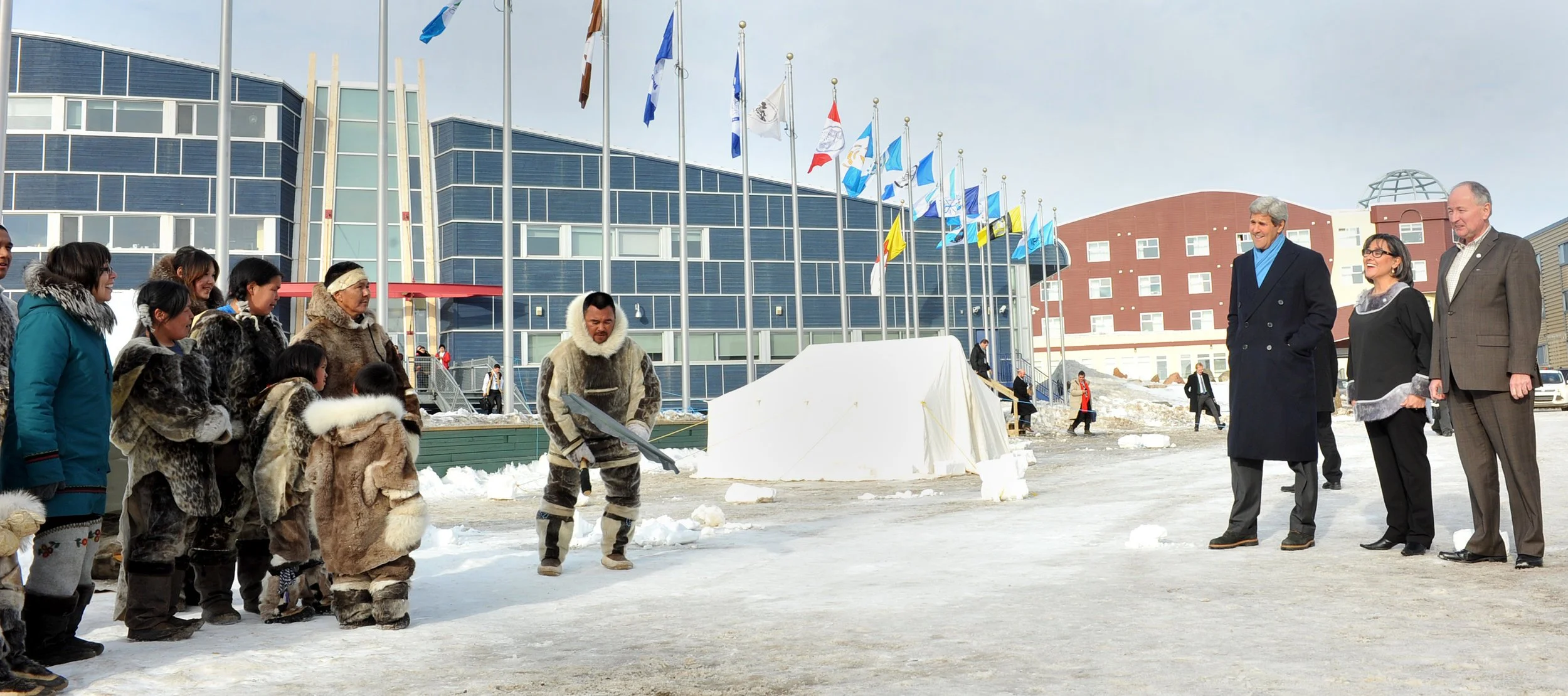
At the 2015 Ministerial meeting in Iqaluit, Canada, the following recommendations for the Integration of Traditional and Local Knowledge into the Work of the Arctic Council were approved and adopted:
(i) Continue development on consensus-based guidelines and processes for the more systematic inclusion of traditional and local knowledge in the work of the Arctic Council.
(ii) Support the use of consistent terminology regarding traditional and local knowledge throughout the work of the Arctic Council.
(iii) a) At the outset of a project, incorporate traditional and local knowledge considerations into Working Group proposal templates and/or work plans so that every project proposal or outline describes how it will use traditional and local knowledge in the project, if applicable. If traditional and local knowledge is not applicable, a section of the project proposal or outline must explain why. In doing so, efforts should be made to communicate project goals, objectives, and methods in terminology accessible to non-technical audiences in order to facilitate early identification of potential traditional and local knowledge components. b) At the conclusion of a project, in the final report to Senior Arctic Officials, there will be a requirement to describe how traditional and local knowledge was used in the project and any lessons learned as to how traditional and local knowledge may be better incorporated in the future.
(iv) Include a traditional and local knowledge column in the Arctic Council Secretariat project tracking tool.
(v) Develop within Working Group processes an inventory of lessons learned and best practices for Arctic Council projects which integrate traditional and local knowledge components.
(vi) Recognize/credit traditional and local knowledge holders’ and community contributions to Arctic Council projects and reports, including co-authorship where appropriate.
(vii) Establish best practices for communicating the results and findings back to traditional and local knowledge holders, communities, and those that have contributed.
Education and Training
Formal education is one way to transfer knowledge. In the Arctic, what kinds of education and training do Indigenous Peoples want?
The University of the Arctic and Arctic Council Indigenous Peoples’ Secretariat organized a panel to discuss this topic during the UArctic Congress 2018 in Oulu, Finland. The Permanent Participants on the panel identified needs within education systems, provided direction for improvement in Arctic education and training, and suggested actions for UArctic. Read the final report below.